
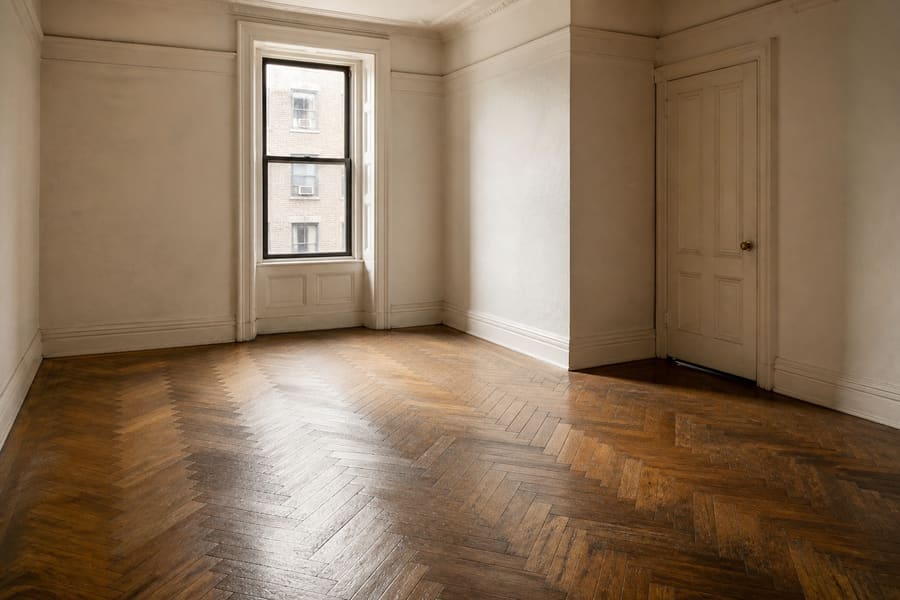
Prewar apartment houses
The buildings where this matters most. Original parquet and herringbone that has been sanded before, and where keeping the boards is worth more than a colour change.
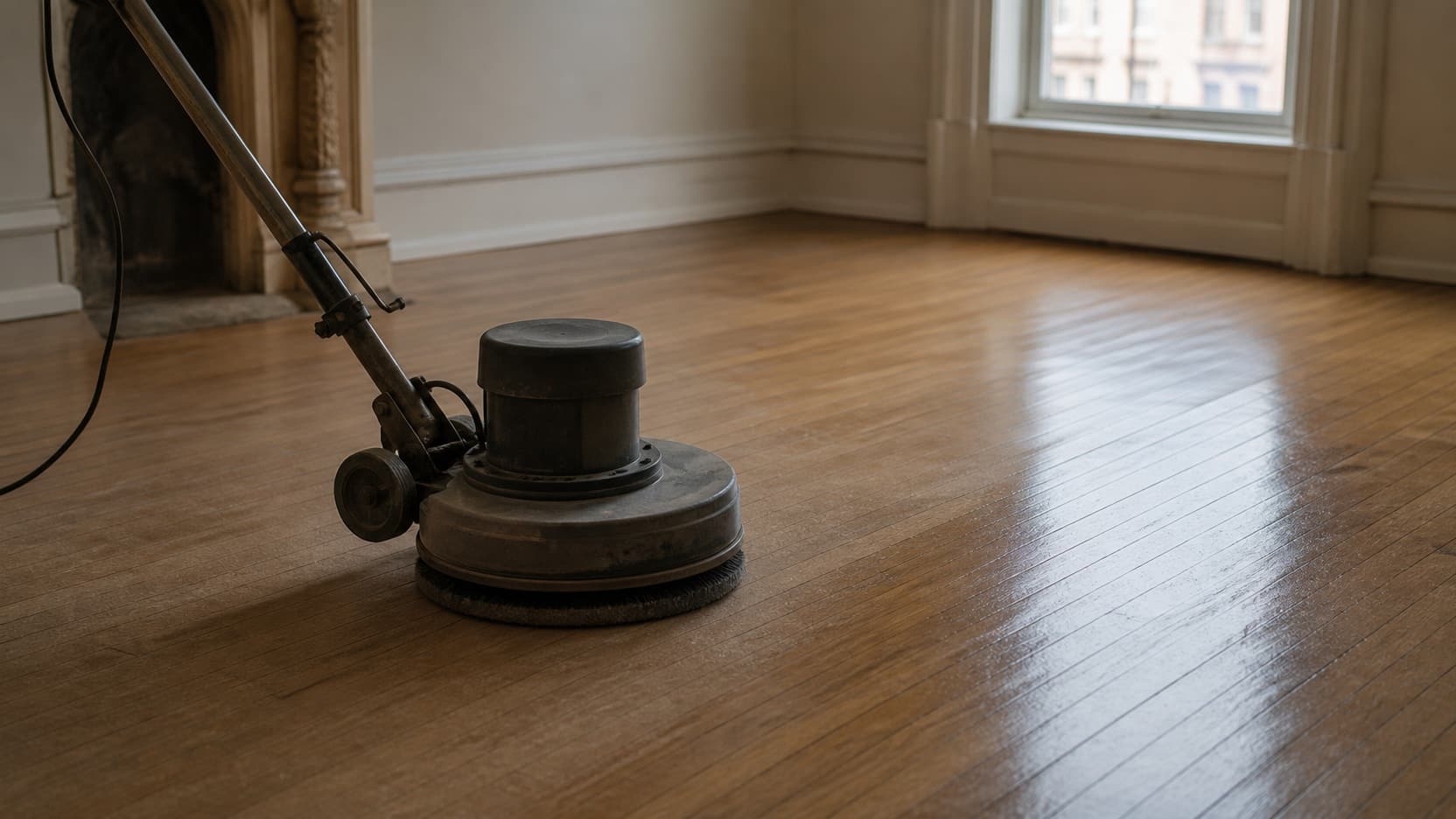
A buff and recoat renews the finish on a floor without sanding it back to bare wood. It takes one day rather than several, and it uses up none of the thickness your floor has left.
We abrade the existing finish with a buffer so the new coat has something to grip, clean the floor down, and lay fresh finish over the top. The wood is never exposed.
You will hear this called three things. Buff and recoat, screen and recoat, and sometimes just a polish or a refresh. They are the same job, and the trade sells it under whichever name it grew up with.
What it is not is refinishing. A recoat cannot change the colour of your floor, because the stain lives in the wood and we are not touching the wood. It also cannot remove anything that has got past the finish into the timber underneath.
This is a real test with a real answer, and you can apply most of it yourself before calling anyone.
The floor looks dull, tired or lightly scratched all over. There is a worn path where people walk. The colour is still even, and when you look closely the scratches sit in the shiny layer rather than in the wood.
There are grey or black patches. Scratches catch your fingernail and show pale wood in the bottom of them. There is water staining, cupping, or bare patches where the finish has gone completely.
Grey means water has been sitting on unprotected wood, and black usually means it got there some time ago. Neither comes out with a coat of finish over the top, because the discolouration is in the timber. Those floors need a full sand.
A solid wood floor has a limited number of full sands in it. Each one takes wood off, and once the boards get too thin above the tongue the floor cannot be sanded again safely.
Manhattan's housing stock is old, and a prewar apartment floor has usually been sanded more than once already. Nobody records it, so the only way to know is to look at the floor and measure what is actually left.
That puts a lot of this borough's floors in a specific position. They are perfectly good floors that cannot take another full sand. A recoat keeps them going and looking right for years more, and it is the difference between maintaining a hundred year old oak floor and eventually having to replace it.
It is also the honest answer more often than the trade admits. If your finish is worn and your wood is fine, sanding to bare wood spends thickness you cannot get back to solve a problem that lives in the top coat.
Most apartments are one day from start to walking on it.
The suitability test above, done properly, plus a check that the existing finish is one a new coat will bond to. This happens before we book the day, not on it.
Furniture out of the area, doorways covered. There is far less to protect than on a full sand because there is far less dust.
A buffer with an abrasive screen takes the sheen off the old finish across the whole floor, and we do the edges and corners by hand.
Everything comes off the floor. Any dust left behind ends up under the new coat permanently, so this step gets the time it needs.
Fresh finish over the top, usually one coat and sometimes two if the floor is taking a lot of traffic.
Light foot traffic the same evening or the next morning depending on the finish. Furniture after that, rugs last.
Describe what your floor looks like and we will tell you honestly whether a recoat will do it.
Call (929) 207-0334The practical differences, which are bigger than the price difference.
One day rather than several. For anyone living in the apartment while the work happens, that is usually the thing that matters most.
Buffing makes very little compared with sanding to bare wood. Nothing is being cut off the floor, only the gloss taken off the finish.
A recoat costs less than a full refinish on the same floor. Less labour, fewer days, and no stain stage.
A recoat takes none. This is the one that decides it for old floors, because thickness is the resource you cannot replace.
A one day job with almost no dust and no colour change is an easier conversation with a building than a week of sanding. Your co-op may still want notice, and it is usually a shorter process.
A recoat is maintenance rather than a rebuild. Done before the finish wears through, it can be repeated. Left until there is grey in the wood, the option has gone.
The buildings where this matters most. Original parquet and herringbone that has been sanded before, and where keeping the boards is worth more than a colour change.
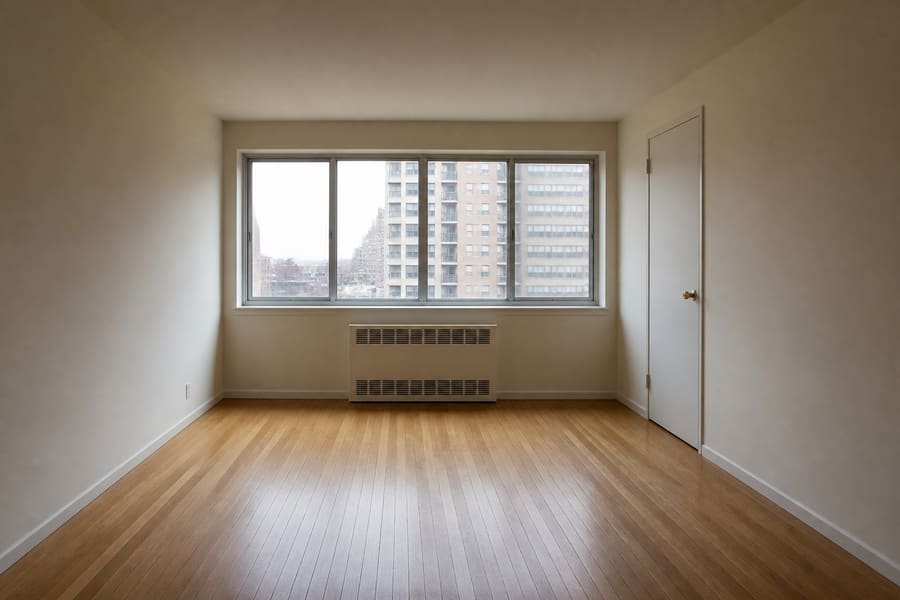
Often thinner engineered or thin solid floors with very little sanding in them to begin with. A recoat is frequently the only finish work these floors can take.
Less equipment to carry up than a full sand, which matters in a walk-up. In a loft the open spans make a recoat quick, and the finish choice matters more with that much foot traffic.
Look at the scratches. If they sit in the shiny layer and do not catch your fingernail, the finish is doing its job and a recoat will work.
Then look for colour. Grey patches, black marks or pale bare spots mean the finish has already failed in those places and water or dirt has reached the wood. That is a full sand.
If you are between the two, send us a photograph in daylight. It is usually obvious to us and it costs you nothing to ask.
No. Once a scratch is in the timber, putting finish over the top seals it in and you can still see it. It reads as a dark line under a glossy surface.
A few isolated marks in an otherwise sound floor may be worth living with, and we will say so rather than sell you a sand you do not need. Widespread scratching into the wood is a refinish.
Yes, on the same floor. It is fewer days of labour, no stain stage, and much less preparation and protection.
The saving is not the main reason to do it, though. The main reason is that it keeps the thickness in your floor, and on a prewar Manhattan floor that is worth more than the difference in price.
Usually, yes. It is one day and the dust is minimal. The floor being coated is out of use while it cures, so we plan around which rooms you need.
There is a finish smell for a while. We will tell you what to expect from the specific product before the day.
That is exactly the question a recoat exists to answer. We measure what is left rather than guessing.
If there is enough wood, you have a choice and we will lay it out. If there is not, a recoat is not a compromise, it is the correct job and the one that keeps your floor.
Most apartments are a single day for the buffing and coating. The wait after that is cure time rather than work time, and how long it runs depends on the finish.
We give you the actual dates for walking on it, putting furniture back, and laying rugs down again.
Send a photograph in daylight and we will tell you whether a recoat will do it.
Call (929) 207-0334Grey patches, damage into the wood, or you want the colour changed. That is a full sand.
The floor is fine except for one area that has been damaged.
The boards themselves have gone and there is nothing left to work with.
That is the most common reason people call us, and it is a short conversation. Tell us what the floor looks like and we will tell you what it needs.