
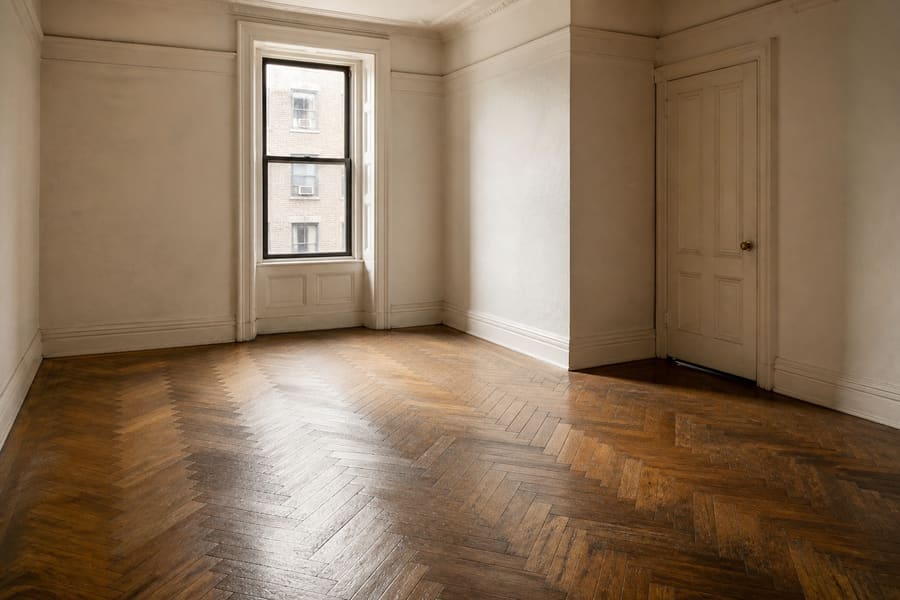
Prewar apartment houses
Original oak strip, parquet and herringbone, usually over sleepers on a slab. Thickness is the question here, and the boards themselves are worth saving.
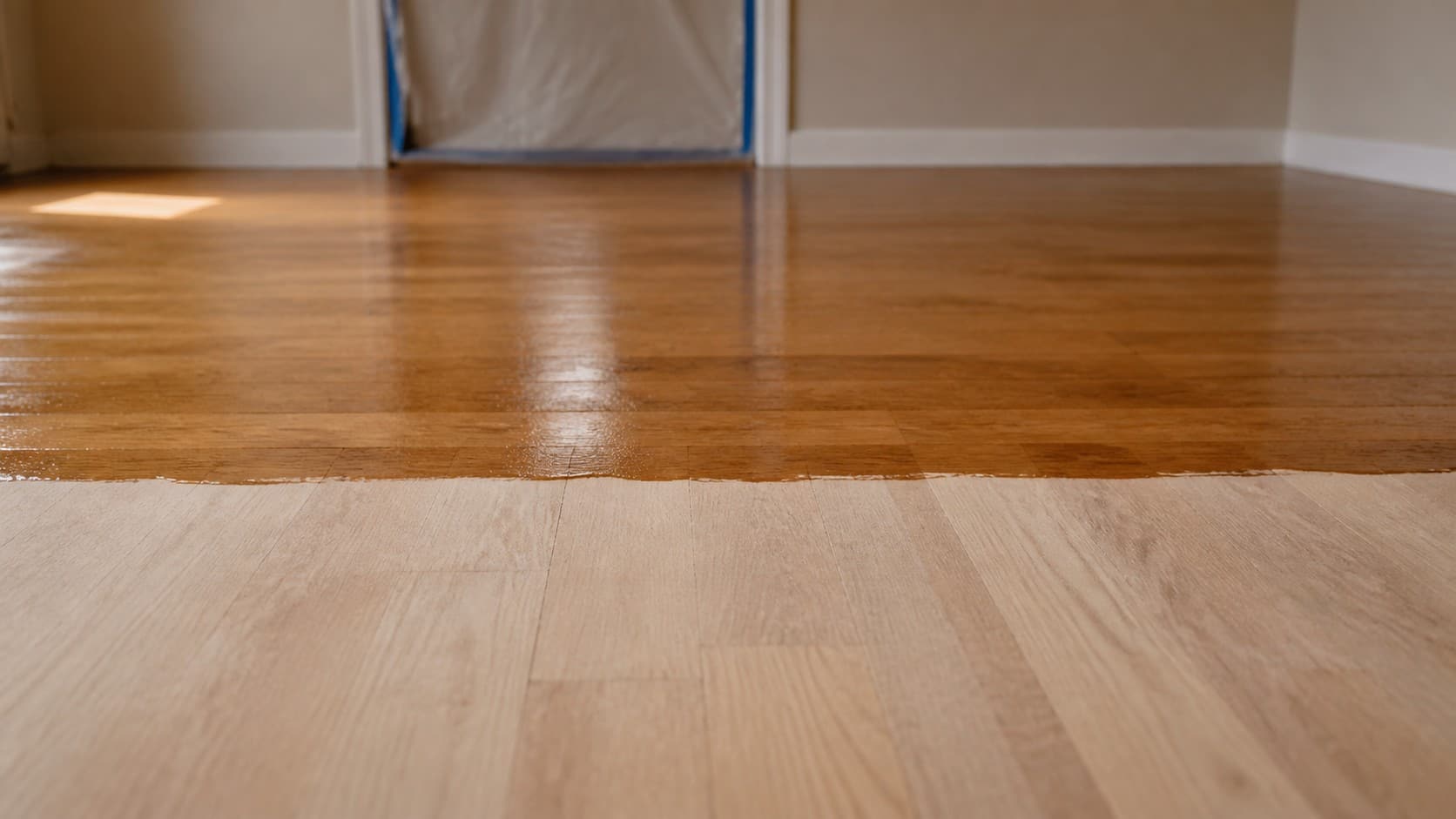
Refinishing takes a hardwood floor you already own back to bare wood and puts a new finish on it. The boards stay. The grey patches, the scratches and the worn path through the middle of the room do not.
Sanding takes the old finish and a thin layer of wood off the top of the floor. What is underneath is the same oak that went down when the building was built, and it is usually in better shape than the surface suggests.
After sanding we stain the floor if you want the colour changed, then build up coats of finish. The finish is what you actually walk on and what protects the wood, so how many coats go on and how long each one gets to cure decides how the floor holds up.
Almost everything people dislike about an old floor lives in the top layer. Grey and black marks, the dull path from the door to the kitchen, fine scratching across the whole room, and a colour that no longer matches anything are all surface problems. A floor can look finished and still have plenty of life in it.
In Manhattan this comes down to thickness. A solid strip floor can be sanded a limited number of times before the boards get too thin above the tongue, and a prewar floor has often been done more than once already in its life.
We check the actual remaining thickness rather than guessing from how the floor looks. The places that tell us most are the edges of the boards, any spot where a vent or a threshold lets us see the section, and how proud the nail heads are sitting.
If there is enough wood, refinishing is the right job and it will look new. If there is not, we say so. A floor that gets sanded once too often loses boards, and replacing a prewar oak strip floor costs many times what a recoat costs.
These are two different jobs. Most people arrive asking for the first and need the second more often than they expect.
We sand to bare wood, so colour can change and damage in the wood itself comes out. Several days, the room is out of use, and it uses up some of the floor's remaining thickness.
We abrade the existing finish and lay a fresh coat over it. Usually one day, far less disruption, and it takes no wood off at all. It cannot change colour and it cannot fix damage that has reached the wood.
The test is simple. If the wear is in the finish only, a recoat works. If there is grey or black staining, or scratches that have gone through to bare wood, the finish is no longer protecting anything and it needs a full sand.
A full refinish in an occupied building, start to finish.
Remaining thickness, what the existing finish is, how the boards are fixed down, and anything that has to be repaired before sanding starts.
The alteration agreement if your co-op wants one, the certificate of insurance naming the corporation and the managing agent, and a work window that fits both the city rules and your building's own.
Furniture out or into a sealed area, doorways sealed, and protection on the route the machines take in. In a walk-up that route is the stairs, which we plan before the day.
Coarse to fine across the field of the floor, then edges and corners with a smaller machine. Our machines run with dust extraction, which takes out most of the dust but not all of it.
We put samples down on your own floor and look at them in your own light. Oak from two different rooms can take the same stain differently, so the sample goes where the floor is.
Coats go on with cure time between them. This is the part that cannot be rushed, and it is the part that decides how the floor looks in five years.
Light foot traffic first, then furniture, then rugs last. We give you the actual dates for your finish rather than a general rule.
Not sure whether yours is a sand or a recoat? Describe what you are seeing and we will tell you.
Call (929) 207-0334We quote on the floor in front of us. These are the things that move the number.
Area is the base of any quote. Rooms broken up by closets, thresholds and built in furniture take longer per square foot than one open floor, because more of the work moves to the edging machine.
A floor that only needs the finish taken off is quicker than one with cupping, deep gouges or boards that have to come out and be replaced first. Repairs happen before sanding, so they add to both.
A thin floor has to be cut carefully and slowly, and sometimes it changes the job from a full sand to a recoat. This is the single most Manhattan specific thing on the list.
Different finishes cost different money, cure at different speeds and wear differently. A fast curing finish gets you back in the room sooner and that is worth real money if you are living there.
A booked freight elevator is straightforward. Five flights of stairs with no elevator is a different day's labour for the same floor area.
A building that allows work from 9am to 4pm gives us fewer hours than the city does, so the same floor takes more days.
The floor is only half of it. The other half is what your building allows and how the work gets in.
Original oak strip, parquet and herringbone, usually over sleepers on a slab. Thickness is the question here, and the boards themselves are worth saving.
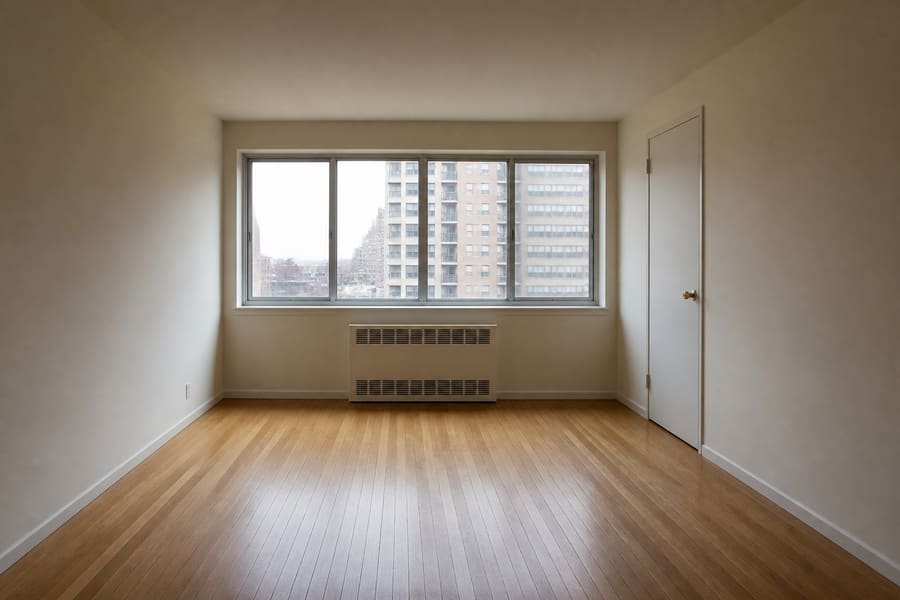
Sound between apartments is the concern, so these are the buildings with the tightest rules about what goes under a floor and how much of it must be covered.
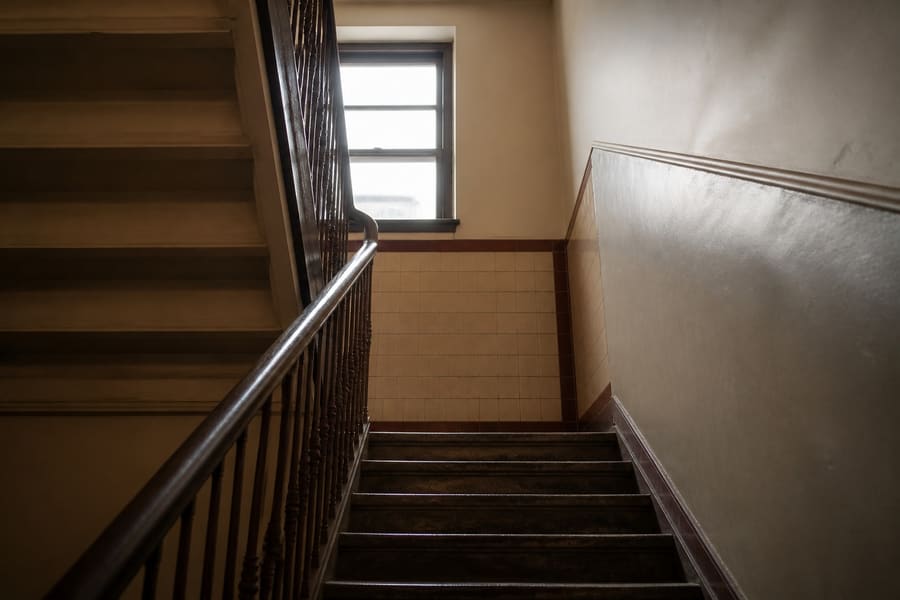
In a walk-up everything moves by stair, which changes the schedule more than the price. In a loft the spans are long and the freight elevator runs to a booked slot.
We quote each floor after looking at it, because the things that move the price are things you have to see. Area, condition, how much wood is left, the finish you pick, and how the machines get into the building all change it.
The two that surprise people most are access and the building's work window. The same floor can be a straightforward job in a building with a freight elevator and a longer one five flights up with no elevator.
Refinishing is almost always cheaper, and in a prewar building it usually gives you a better floor as well. The oak in an original Manhattan floor is old growth timber that is hard to buy now.
The one thing that decides it is remaining thickness. When there is not enough wood left to sand safely, a recoat keeps the floor going for years more, and replacement only comes into it when the boards themselves have failed.
Some people do and some people cannot. It depends on how much of the apartment is being done, whether there is a way to keep a bedroom and a bathroom sealed off, and which finish we are using.
Sanding makes dust even with extraction running. Finish coats need the area kept clear while they cure, so the room being finished is out of use for the whole of that time.
If you are staying we sequence the work so you always have somewhere to sleep and wash, and we tell you before we start which days are the difficult ones.
A typical apartment runs several days. Sanding is the fast part and the finish coats are what set the length, because each one needs time to cure before the next.
Two things stretch it. Repairs that have to happen before sanding, and a building work window shorter than the city's own, which is common.
There is no fixed number, because it depends on how much wood sits above the tongue of the board and how much previous sandings took off.
In practice a solid strip floor has a limited number of full sands in it across its life, and a century old Manhattan floor has often used some of those already. That is why we measure rather than assume, and why a recoat is so often the right answer here.
In most co-ops, yes. Refinishing is normally cosmetic work that needs no city permit, but the building still wants notice and usually a short alteration agreement.
There is no standard version of that document. Each building has its own, shaped by its proprietary lease and years of board policy, which is exactly why it confuses people. We work from whatever yours actually requires.
A certificate of insurance that names the co-op corporation and the managing agent as additional insureds. Buildings commonly ask for one million per occurrence and two million aggregate on general liability, plus workers compensation and disability.
Your managing agent will tell you the exact wording they want. Getting that early is worth doing, because a certificate with the wrong entity named on it is the most common reason a start date slips.
Many older co-ops require carpet or rugs over at least 80% of the floor area, not counting kitchens and bathrooms. It exists to keep sound from moving down into the apartment below.
It matters here because it can change what you are allowed to end up with. If your building has that rule and you want bare wood, the usual route is an acoustic underlayment that meets the building's specification. Check your own house rules, because not every building has it and the ones that do word it differently.
New York City allows construction work on your property between 7am and 6pm on weekdays. At all other times, including weekends, an after hours authorisation is required, and that is issued by the Department of Buildings.
Buildings routinely set tighter hours than the city does. Yours is the window that actually governs the job, so we plan around your house rules rather than around the city rule.
Still not sure whether your floor has another sand in it? We can usually tell you on the phone.
Call (929) 207-0334Refinishing is one of six. These are the ones people move to from here.
Your finish is worn but the wood underneath is sound. Faster, cheaper, and it takes no thickness off.
The problem is damage in one area rather than wear across the whole floor.
The floor has no sanding left in it, or the boards themselves have gone.
What it looks like, what building it is in, and whether you have spoken to your managing agent yet. That is enough for us to tell you which job you are looking at.