
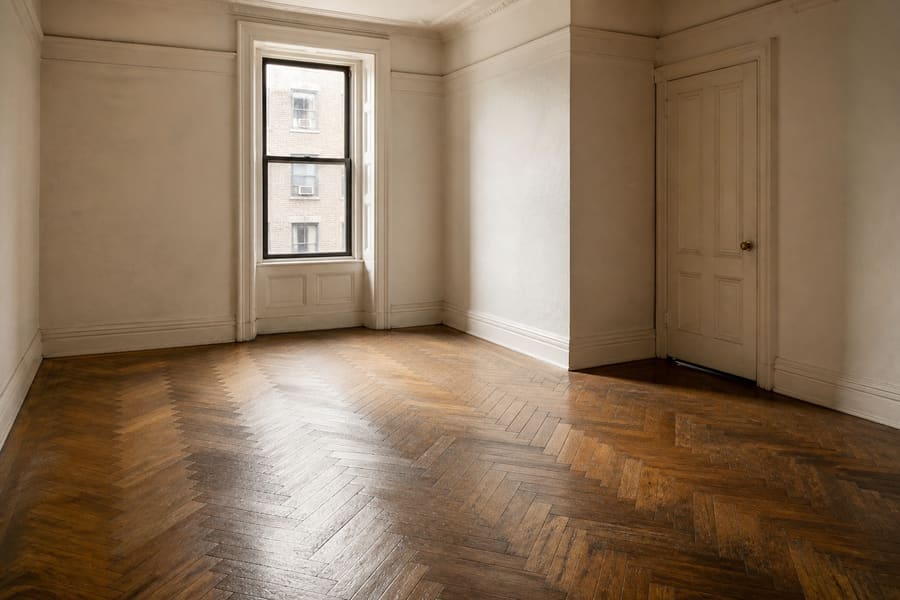
Prewar apartment houses
Usually a kitchen or bathroom job rather than a whole apartment, because the original wood elsewhere is worth keeping. Old subfloors need levelling before a floating floor goes on.
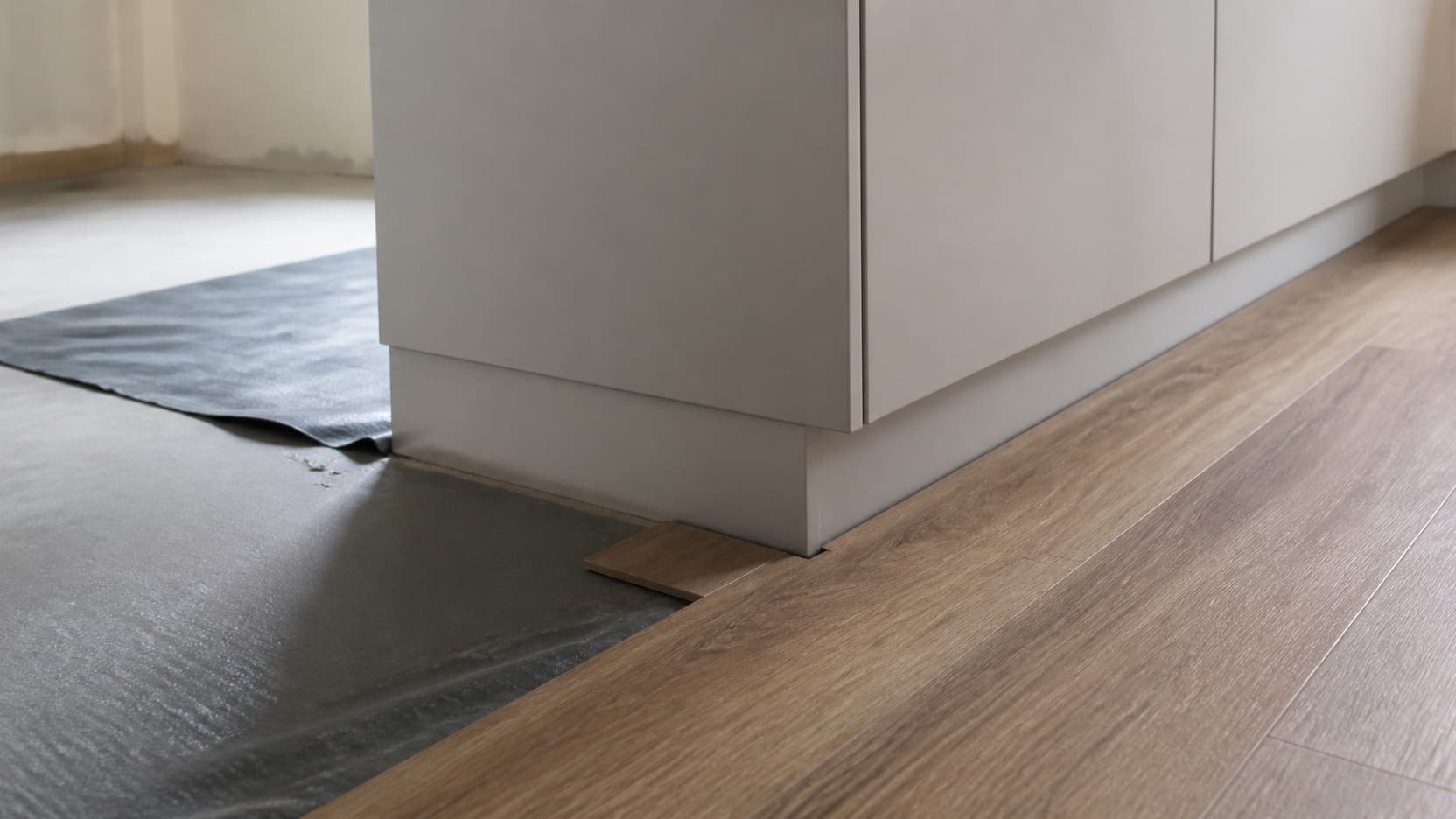
Luxury vinyl plank is the one floor here that is genuinely waterproof. That is why it goes in the kitchens, bathrooms and slab level rooms where wood and laminate should not.
A plank made entirely from waterproof material, with a printed decorative layer and a clear wear layer over the top. There is no wood and no paper core anywhere in it.
That is the whole point. A laminate board has a dense wood based core, so water that reaches it swells the board permanently. Vinyl plank has nothing in it for water to damage, which is why it can go in rooms the other floors cannot.
The good ones look convincing. Deep texture that follows the printed grain, longer plank formats and varied board images so the pattern does not visibly repeat across a room.
Waterproof and water resistant are not the same claim and the difference is where most disappointment comes from.
Water resistant means the surface will handle a spill you wipe up. Most laminate is water resistant. Waterproof means the material itself is unaffected by water, so a leak that sits under a cabinet overnight does not destroy the floor.
There is a limit worth knowing. The plank is waterproof and the installation is not automatically watertight. Water that gets through the joints and sits underneath can still cause problems with the subfloor and with what grows down there. A vinyl floor survives a leak far better than any alternative, and it is not a reason to leave a leak running.
For a bathroom, a laundry area or a kitchen with a dishwasher, this is the floor we recommend, and it is the one we would put in our own.
Two ways to install the same material, and the room decides which.
Planks lock to each other and float over an underlayment. Faster, and it copes with a subfloor that is not perfect. It is the usual choice in a living space and it works with the acoustic layers buildings specify.
Each plank is bonded to the subfloor. It needs a flatter, better prepared base and takes longer, and it is the more stable option in a wet room, over underfloor heating, or across a very large area.
For sound, a floating installation over the acoustic underlayment your building specifies is normally what a co-op wants to see. Glue down transmits impact sound differently, so check your house rules before choosing it in an apartment building.
The material is different. The building's questions are the same.
A hard floating floor over a slab needs an acoustic layer, and your building will name the product or the rating. This applies to vinyl exactly as it applies to laminate and engineered wood.
Replacing a floor is an alteration. Most co-ops want notice and an agreement whatever is going down.
Naming the co-op corporation and the managing agent as additional insureds, on the terms your managing agent specifies.
Where a building has it, it counts exposed hard floor. Vinyl plank counts the same as wood for that purpose.
Vinyl is thinner than most alternatives, which helps where a doorway or an appliance is tight. Add the acoustic layer back in before assuming it clears.
Weekdays from 7am to 6pm under the city rules, and whatever narrower window your own building sets.
Kitchen, bathroom or a room at slab level? Tell us which and we will tell you what suits it.
Call (929) 207-0334Kitchens are the most common. A dishwasher, a sink and a refrigerator line make a kitchen a room where water eventually appears, and a floor that shrugs that off is worth having.
Bathrooms and laundry areas are the obvious ones, and vinyl plank gives you a continuous plank floor in a room that would otherwise be tile.
Slab level and below grade rooms matter here too. Converted spaces, ground floor apartments and the lower levels of office to residential conversions all sit closer to moisture coming out of concrete, and vinyl is the most forgiving floor over that.
The other use we see a lot is a single floor running through an open plan apartment. If your kitchen and living area are one space, vinyl lets you run one material across all of it without worrying about which half is which.
Usually a kitchen or bathroom job rather than a whole apartment, because the original wood elsewhere is worth keeping. Old subfloors need levelling before a floating floor goes on.
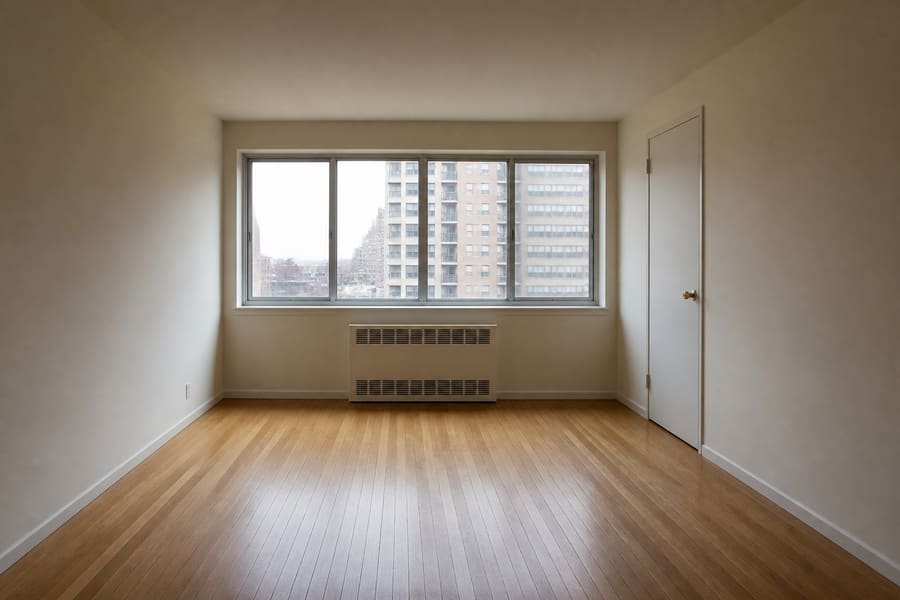
Thin assemblies over concrete, where vinyl's low build up is an advantage. The acoustic layer is still required and still decides the total height.

Light to carry up, which matters when everything goes by stair. In a loft it handles the large open runs well and takes the traffic those spaces get.
Yes. This is the floor for it. The plank is unaffected by water, so splashes, a wet floor after a shower and a slow leak under a vanity do not destroy it.
We detail the edges and any threshold carefully so water has less chance to get underneath in the first place.
The planks themselves survive it, which is more than any wood or laminate floor will do.
The honest caveat is what is underneath. Water that gets through the joints can sit on the subfloor, so a real flood still means lifting the floor to dry things properly. The difference is that the floor usually goes back down afterwards rather than into a skip.
Laminate has a wood based core. Vinyl does not. That single difference is the whole answer.
A water resistant laminate handles a wiped up spill. Neither the core nor the joints handle water that sits, and once a laminate board swells it stays swollen.
Yes, and it is one of the better choices for it. Vinyl does not take up moisture the way wood does, so slab moisture is far less of a threat.
We still test and manage the slab properly, because moisture affects adhesives and anything trapped under a floor.
This is where vinyl earns its place. Below grade rooms are damper and less stable in temperature, and solid wood should not go there at all.
We look at where the moisture is coming from before recommending an installation method, because that decides click or glue down.
Click for most living spaces, especially in an apartment where an acoustic underlayment is required. It is quicker and more forgiving of the subfloor.
Glue down where the room is genuinely wet, where the area is very large, or where the floor sits over heating. It needs a better prepared base and gives a more stable result.
Yes, and your building will have a view. A floating vinyl floor over the acoustic underlayment your house rules specify is normally what gets approved.
Glue down behaves differently acoustically. Check the specification before choosing it in a co-op or condo.
Kitchen, bathroom or a slab level room? Tell us which and we will tell you what suits it.
Call (929) 207-0334For dry rooms where waterproof is not the deciding factor.
A real wood floor for the rooms where water is not a concern.
If there is an original wood floor elsewhere in the apartment worth bringing back.
Kitchen, bathroom, a whole apartment or a slab level space. Which room it is decides both the material and how we lay it.